Reward System
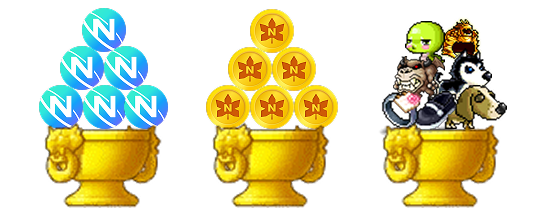
Designing the reward system for PetStory has been one of our most complex challenges. Unlike many blockchain-based games, PetStory does not plan to release its own NFTs in the near future in order to achieve goal #1: Utility.
This limits potential revenue streams and raises an important question: How can we meaningfully reward players without relying on our own NFT distribution?
This issue has sparked deep internal debates and even led to key differences within our founding team.
The following section outlines our approach to balancing fairness, sustainability, and engagement across both Web2 and Web3 ecosystems.
Web2 vs Web3
Investment in games comes in many forms — time, money, and skill. To create a satisfying reward experience, we first need to understand how Web2 and Web3 game economies differ.
Web2: Infinite Resources and Linear Progression
In traditional Web2 online games, developers can mint unlimited resources. As players grow stronger and complete harder challenges, they’re rewarded with better items, currencies, or materials, both in quality and quantity. More importantly, rewards don’t dilute as more players progress. This consistency keeps players motivated and ensures a clear sense of progression.
Web3: Scarcity and Raffle-Based Rewards
In contrast, most Web3 games, such as MSN, operate on scarcity-based reward systems. Rewards are often distributed through raffles or limited drops. Initially, this feels exciting and fair, but as the player base expands, competition increases dramatically. Many players may go days without receiving meaningful rewards, leading to frustration and disengagement, especially when in-game progress is solely tied to these NFTs.
For example, early MSN players could defeat Zakum with a single character and reliably earn one weapon per day. Now, even with multiple characters capable of defeating Zakum, a player might still receive only one drop, which is a clear misalignment between effort and reward expectation.
This sense of declining returns erodes player motivation over time, which is something we aim to avoid.
Hybrid Approach
To create a more sustainable and inclusive system, PetStory will adopt a hybrid reward model that combines Web2 (in-game resources) and Web3 (NFT) elements.
In-game resources will be rewarded in proportion to player progression. As players strengthen their pets and achieve new milestones, their resources earnings will scale accordingly. To protect both PetStory and MSU economies, there will be no direct conversion from in-game resources to NFTs or tokens (Nesos / NXPC). This separation preserves balance, prevents inflationary pressures, and safeguards long-term value.
Instead, NFT or token rewards distribution or transfers will be based on player-to-player interactions, such as trading, raids, competitions, or community-driven events. This ensures that Web3 rewards remain meaningful and tied to social and economic participation rather than mere grinding.
This dual-layer structure bridges the best of both worlds: the familiar, rewarding progression of Web2 gameplay and the empowering ownership opportunities offered by Web3 assets.
Who Should Be Rewarded
Different reward models favor different types of players:
Money-based rewards create “pay-to-win” environments that benefit whales but alienate casual players.
Time-based rewards reward dedication but disadvantage players with limited free time, contradicting goal #3: Accessibility.
Skill-based rewards celebrate mastery but discourage more casual participants.
PetStory aims to balance investment, time, luck, and strategy so that all types of players feel valued. Whether you’re a working adult, optimizer, or casual fan, your contribution should feel meaningful and fairly rewarded.
Continuous Evolution
Our reward system is not static. It will evolve based on community feedback, data-driven balancing, and iterative testing. We view the economy as a living ecosystem, one that must adapt to maintain fairness, sustainability, and fun over the long term.